What Is Your Unique Sweat Fingerprint?

Sweat on person
August 05, 2024

What Is Your Unique Sweat Fingerprint?

Life Stories, Sweat

Everyone sweats differently. We all have our own unique way of sweating. That’s why when you start using a sauna, it can feel confusing. You may find yourself wondering, “How much should I expect to sweat?” “Why am I not sweating much?” “Why am I sweating so much?” “How do I know it’s working?” “Why do I sweat differently than my friend or family member?”

5 Sweat Rate Factors That Shape Your Fingerprint

Here are some of the factors that influence your sweat pattern:

  • Your fitness level: The primary function of sweat is to regulate core temperature to prevent overheating. For athletes and physically fit people, their bodies have a highly developed thermoregulation system that anticipates an increase in core temperature during exercise. Their system often starts releasing sweat sooner to help cool the body before it overheats.
  • Hydration status: The amount of water in your body correlates to the amount of sweat produced by your body. When you are dehydrated, the body views sweating as a low-priority task and conserves available water for critical functions. Since your sweat can also contain electrolytes, ensuring adequate post-sauna hydration is essential.
  • Acclimation to heat: Newer sauna users may sweat less as their bodies adjust to the sauna environment. With constant heat exposure, the body undergoes physiological adaptations, during which the nervous system learns when to activate sweat glands.
  • Genetics and body composition: The number of glands your body has is determined by genes. While the average human has 2 to 4 million glands, others may have slightly fewer or more, and this number will never change. The more glands you have, the more sweat you produce. Another factor to consider is body mass. A person with a larger body mass may generate more heat, hence requiring more sweat to cool down. 
  • Your pre-sauna routine: What you do before using a sauna can significantly affect the amount of sweat your body releases. Using the sauna after a workout can slightly raise your core temperature, encouraging faster sweating. However, never neglect a proper cooldown to ensure you lower your heart rate safely.
What if I Am Not Sweating Much in the Sauna?

It is perfectly normal not to sweat a lot in the sauna, especially for new users. Unlike traditional saunas, which heat the air around you first, our infrared saunas focus on penetrating the body to heat you from the inside out.

With our advanced technology, you experience critical benefits like deep-tissue relaxation and improved circulation before you even start sweating heavily. However, as your body becomes accustomed to the sauna, you may notice an increase in the amount of sweat you are producing.

How to Sweat More in a Sauna

Here are some actionable steps you can take if you want to sweat more in the sauna:

  • Hydrate before and after: To help your body sweat effectively, you will need to ensure you are properly hydrated. You can have around two to four cups of water before a sauna and repeat afterward to replenish the water you lost. 
  • Be consistent with your routine: Use the sauna at least twice a week to acclimate your body to the temperature and improve its sweating mechanism.
  • Find your ideal temperature: Experiment with the temperature settings to find what works best for your body. You can start with a lower setting and increase it slowly.
  • Stay longer: Changing your sauna duration can also affect your sweat levels. If you are not sweating enough during a 10-minute session, you can increase the duration. Remember to opt for small increments, such as 2 or even 5 minutes. Don't immediately move from a 10-minute session to a 20-minute session.
Embrace Your Sweat Fingerprint

Your sweat pattern is unique and requires you to implement personalized sauna programs that will match how you sweat. Explore our infrared saunas for a sauna that matches your health goals. For those seeking deep sweat, our Amplify saunas deliver full-spectrum wavelengths that penetrate the body for faster sweating.

Please consult our safety and contraindications information before use.

And isn’t it interesting that even your actual fingerprint itself sweats!? Yes, it’s one way that drug tests are performed.2 Small openings in the ridges that form your fingerprints are actually sweat pores connected to ducts of sweat glands under the skin. The science of poroscopy examines the characteristics of sweat pores on fingerprints to make a personal identification. (So, it’s not just our palms that get sweaty when we’re nervous!)

Different Glands = Different Sweat

Isn’t all sweat the same? Well, actually, no it isn’t. Two different sweat glands produce two different kinds of sweat in your body. And, two other types of glands contribute to your unique sweat composition as well. Different conditions trigger different kinds of sweat.

“Normal” Sweat Comes from the Eccrine Glands

When the body gets hot, sweat releases from the eccrine glands to help cool the body. This is the sweat that comes to mind when we think about exercise and regulating our body temperature. The eccrine glands open directly onto the surface of your skin and produce non-smelly, watery sweat with a bit of salt and a few lipids.3 Our bodies contain anywhere from 2 to 4 million sweat glands--the majority are eccrine glands. They cover our entire body, and we tend to have more of them in our palms, soles, forehead and armpits.

“Stress Sweat” Comes from the Apocrine Glands

When our bodies react to emotion like stress, anxiety or excitement, sweat releases from the apocrine glands. (Your underarms secrete about 30 times more sweat when you’re stressed.) These glands open into the hair follicle, then flow up to the skin’s surface and they excrete thicker, milky sweat that doesn’t evaporate as quickly and can get stinky.3 It’s richer in proteins, lipids, fats, and nutrients that feed the bacteria that live on our skin, which is what causes body odor. The apocrine glands are larger than eccrine glands and develop in areas dense with hair follicles like your scalp, underarms and private parts.

Other Factors Affecting Sweat

Genetics isn’t the only thing affecting how you sweat. It’s a complex equation that also includes gender, age, environment, weight, hydration, nutrition, health, and fitness level. All these factors have variables, too. For instance, a study in the Journal of Applied Physiology found sweat rates depend on heat production based on factors like body size and environment, not cardiac fitness. In other words, a bigger body has to work harder, so likely sweats more.4 And a recent small Australian study agreed with that, saying that body mass rather than sex is a stronger factor in how much we sweat.5 Another study found that heat acclimation improves sweating functions.6 Another variable is physical fitness: the more fit you are, the more efficiently you sweat because the body sweats earlier in a workout at a lower body temperature, cooling the body faster.

So, as you evaluate the way your own body is sweating, know that it is possible you may or may not have 2 million or 4 million sweat glands, and your body has its own unique blend of eccrine and apocrine glands of varying sizes. It’s important not to compare yourself to others but rather listen to your own body. Be curious about the way you sweat, when you sweat, how much you sweat, and what it looks like on your skin. What parts of your body perspire more? With so many factors to consider, remember the amount you sweat is not a measure of how effectively you sweat; it may be more a measure of the number, size, and place of sweat glands you have—it’s your very own sweat fingerprint.

Shop industry-leading saunas

mPulse Smart Sauna

CONNECTED & CUSTOMISABLE RED/NEAR, MID & FAR IR  

Optimise your well-being in Sunlighten's premier, patented 3 in 1 infrared sauna, with integrated red light, delivered through 6 pre-set health programmes in optimal dosages. Support your goals, create routines, and enjoy in-sauna entertainment. The mPulse Smart Sauna will make you want to sauna more. It’s why you want one in your home for the ultimate wellness gift.

VIEW SAUNA

Amplify Full Spectrum

SWEAT DEEP, SWEAT FAST, FEEL PRODUCTIVE

Save time and receive the maximum benefits with Sunlighten's most-effective, full spectrum infrared therapy. Experience a more intense heat amplified by our halogen heaters. 

GET PRICING

Signature Far Infrared

MOST EFFECTIVE FAR INFRARED SAUNA

For simplicity and affordability, give yourself a Sunlighten Signature home sauna. In your peaceful sanctuary, enjoy a deep cellular detox and support your overall wellness with the push of a button. 

GET PRICING

Solo System

PERSONAL INFRARED SAUNA

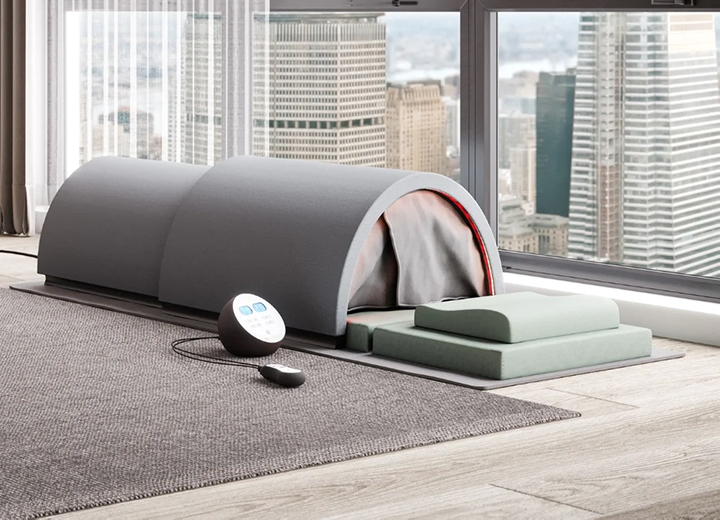
The Solo® System surrounds your body with the transformative benefits of Sunlighten's premier far infrared technology in a unique wellness cocoon (9 heaters over and under you). It's the same patented infrared in our cabins, refitted into this smaller, personal-size infrared sauna. Cosy and convenient, easily nests to fit into a corner or a closet. 

VIEW SAUNA
REFERENCES

1 Hayes JE, Keast RS. Two decades of supertasting: where do we stand?. Physiol Behav. 2011;104(5):1072-1074. doi:10.1016/j.physbeh.2011.08.003

2 Drug screening using the sweat of a fingerprint: lateral flow detection of Δ9-tetrahydrocannabinol, cocaine, opiates and amphetamine, Journal of Analytical Toxicology, Volume 43, Issue 2, March 2019, Pages 88–95, https://doi.org/10.1093/jat/bky068

3 Baker LB. Physiology of sweat gland function: The roles of sweating and sweat composition in human health. Temperature (Austin). 2019;6(3):211-259. Published 2019 Jul 17. doi:10.1080/23328940.2019.1632145

4 Cramer MN, Jay O. Explained variance in the thermoregulatory responses to exercise: the independent roles of biophysical and fitness/fatness-related factors. J Appl Physiol (1985). 2015 Nov 1;119(9):982-9. doi: 10.1152/japplphysiol.00281.2015. Epub 2015 Aug 27. PMID: 26316511; PMCID: PMC4628991.

5 Sean R. Notley, Joonhee Park, Kyoko Tagami, Norikazu Ohnishi, Nigel A. S. Taylor. Variations in body morphology explain gender differences in thermoeffector function during compensable heat stress. Experimental Physiology, 2017; DOI: 10.1113/EP086112

6 Foster J, Hodder SG, Lloyd AB, Havenith G. Individual Responses to Heat Stress: Implications for Hyperthermia and Physical Work Capacity. Front Physiol. 2020;11:541483. Published 2020 Sep 11. doi:10.3389/fphys.2020.541483

profile picture

WRITTEN BY: Sunlighten

Shining light on infrared technology, Sunlighten® is the #1 choice for personalized infrared light treatments. Since 1999, we have been committed to innovating wellness products and services that empower our customers to improve their quality of life. Our patented SoloCarbon® technology rejuvenates the body by delivering the highest dose of infrared energy to the body - proven up to 99% effective. Our technological innovations are fueled by our passion to make a difference. And we are building a global community of businesses, consumers, and trusted experts to support each other along the way and make the world a healthier, happier place.

Sunlighten saunas are not a medical device as defined by Section 201(h) of the Food, Drug & Cosmetic Act. Sunlighten provides general information relating to various medical conditions for informational purposes only and is not meant to be a substitute for advice provided by a doctor or other qualified health care professional. Please consult with your physician regarding diagnosis or treatment.